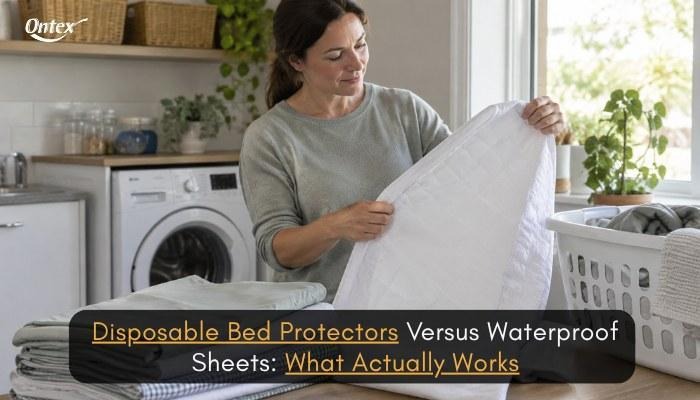
Disposable bed protectors are the better choice for most families managing incontinence at night. They soak up liquid and lock it behind a waterproof backing, which means your mattress stays clean and dry. Waterproof sheets, on the flip side, only block fluid from soaking through without absorbing anything at all.
This difference between them is important if bed wetting happens often. Without enough protection, you may end up doing more washing, dealing with mattress odours and worrying about keeping the bed fresh. At Ontex Healthcare, we help Australian families handle incontinence with the right protection and a lot less stress.
So, what’s the better option? Well, absorbency and waterproofing aren’t the same thing. That’s why, in this article, we’ll compare disposable bed pads and waterproof mattress sheets based on protection, comfort, convenience and cost.
Disposable Bed Pads vs Waterproof Sheets: How They Handle Leaks
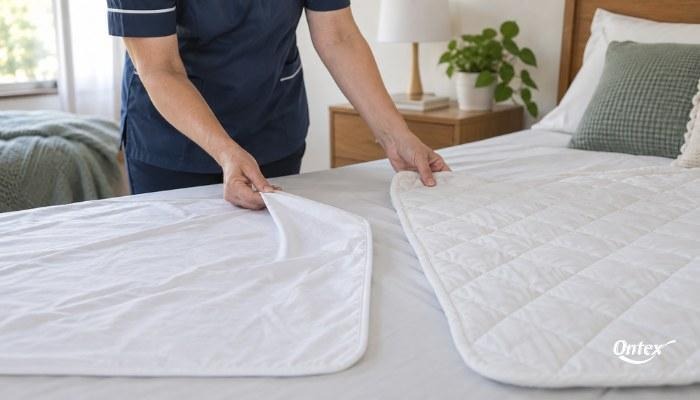
Disposable incontinence bed pads absorb the accident. Waterproof mattress sheets block it from reaching the mattress but leave wet bedding on top. Both protect your bed, but the cleanup experience differs greatly.
A few practical differences will help you pick the right option for your situation.
How Disposable Incontinence Bed Pads Work
A disposable bed pad sits on top of your fitted sheet and covers the area where leaks are most likely to happen.
It has three layers, and each one has a specific job. The soft top layer lets liquid pass through, while the absorbent middle layer pulls in moisture and locks it away. A waterproof backing then helps keep the mattress and sheets dry.
After a leak, you just roll the used pad up, throw it away, and put a fresh one down. The whole change usually takes about 30 seconds, with no sheets to strip or wash.
In fact, our iD Expert Protect Super bed pads can absorb up to 1,980 mL each, roughly the amount in a large water bottle. You can also use them on chairs and other furniture where leaks are a concern.
How a Waterproof Fitted Sheet Works
A waterproof fitted sheet covers the mattress like a regular bottom sheet. Its waterproof layer stops urine from reaching the mattress, so the sheet can protect the mattress without needing replacements after every leak.
Because you can wash and reuse it, a good-quality waterproof sheet can last around 2 to 3 years with proper care (making it a useful long-term option).
The catch is that the sheet itself doesn’t absorb any liquid. So if a leak happens overnight, urine will pool on top of the protector and soak through the regular sheet above it. Yes, your mattress will stay safe. But your loved one will still wake up lying in a wet, uncomfortable bed that needs full stripping and washing.
The 2 AM Test
Picture a leak at 2 am. With a disposable bed pad, you can remove the wet pad, throw it away and put down a fresh one. The bed is ready again in under a minute, so everyone can get back to sleep quickly.
On the other hand, a waterproof sheet protects the mattress, but it doesn’t absorb the leak. You’ll still need to remove the wet bedding, wash it, dry it and remake the bed. For carers managing night-time incontinence, that can make a quick pad change into a 30-minute job and disrupt everyone’s sleep.
However, disposable pads aren’t perfect. Their performance depends on the pad’s absorbency, size and position. Even so, they have a clear advantage when quick and easy overnight changes are your priority.
Bed Pads, Comfort and Cost: Which Option Makes Everyday Life Easier?

Disposable bed pads make daily incontinence care simpler for most families, especially when leaks happen often. Waterproof sheets can save money over time, but they add more hands-on work to your routine.
A few of these factors can help you figure out which option gives you the better value.
Hygiene and Clean-Up
Disposable bed pads trap moisture inside the pad, which you throw away after each use. That means the urine, odour and bacteria go with it, so there’s nothing left to wash or sanitise.
Reusable waterproof sheets, on the flip side, need laundering at 60°C or higher after each accident to stay properly hygienic. Tumble drying after washing also helps reduce any bacteria left on the fabric.
If leaks happen most nights, that can mean three to five extra loads of washing per week on top of your normal household laundry. Even cutting out a few of those loads can give carers back some much-needed time and energy.
Comfort, Skin and Dignity
When skin stays in contact with moisture for too long, it can become red, irritated, and inflamed. Clinicians call this incontinence-associated dermatitis (IAD). An Australian hospital study found that at least 42% of patients with incontinence had IAD. A soft, breathable bed pad that quickly pulls moisture away from the skin can help lower this risk.
Comfort is important too, especially since bed wetting and incontinence can affect a person’s confidence. A quick and calm clean-up at night can reduce that embarrassment and help everyone get back to sleep sooner.
That said, comfort does vary between products. Not every disposable pad feels the same against the skin. So look for pads with a soft non-woven top layer and a highly absorbent core, like our iD Expert Protect range.
What Does “Cost-Effective” Really Mean?
The upfront price doesn’t show the full cost of each option. Looking at what a family spends over 12 months will give you a clearer comparison. A side-by-side breakdown can show how the costs add up over time:
| Cost Factor | Disposable Bed Pads | Reusable Waterproof Sheets |
|---|---|---|
| Product purchases | Ongoing (roughly $40-$85/month) | One-off ($50-$150 for a set) |
| Water and energy | None | Extra loads each week |
| Detergent | None | Ongoing |
| Time stripping and remaking beds | Minimal (30-second pad swap) | Significant (full bed change) |
| Household laundry capacity | No impact | Adds 3-5 loads/week |
So on raw dollar cost alone, reusable sheets often come out ahead over a year or more. But cost isn’t just about money. Time spent stripping wet beds at 2 am, running extra wash cycles, and drying heavy bedding all carry a price too.
For carers managing frequent overnight incontinence, disposable bed pads can offer greater practical value because they remove most of that daily workload. Families with lighter or occasional leaks, though, may find reusable sheets stretch the budget further.
What About Waste?
Single-use pads do create more landfill waste, and there’s no way around it.
Research from Southern Cross University found that adult incontinence products already send more waste to Australian landfills than baby nappies. By 2030, that figure could grow four to ten times higher as the population ages.
The best product choice will depend on what’s most in your daily routine. If you need quick changes, strong absorbency and less laundry, disposable bed protectors will be more practical. However, if reducing waste is a priority and you’re comfortable with regular washing, a reusable waterproof sheet will be a better fit.
You can also use both together, with a waterproof sheet protecting the mattress underneath and a disposable pad handling leaks on top.
Choose Bed Protection for Easier Night-Time Care
When someone wakes up in a wet bed, the priority should be getting the person clean and dry. And then helping everyone get back to sleep as quickly as possible.
For families managing incontinence at home, disposable bed pads can make these night-time changes much easier. They absorb liquid and help stop it from reaching the mattress. That way, you can remove the used pad and replace it with a fresh one instead of stripping the whole bed.
A waterproof fitted sheet can still provide extra protection underneath. But if you need to choose one option for frequent accidents, disposable pads are the more practical choice.
For more incontinence care solutions, explore the full range of products from Ontex Healthcare.
Disclaimer
This blog provides general health and product information for educational purposes only. It is not intended to diagnose, treat, or replace advice from your healthcare professional. Always seek guidance from your GP, nurse, continence advisor, or pharmacist regarding your individual needs. If symptoms persist or you’re unsure about product use, consult a qualified healthcare provider.