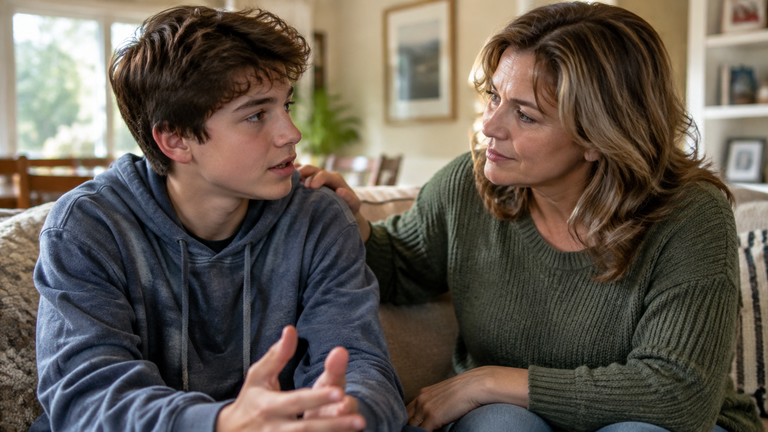
Bullying prevention starts with three practical steps: listen without blame, check whether a teen feels safe, and plan a manageable next step together. Parents don’t have to decide right away whether a painful peer interaction meets the definition of bullying before offering support. The Centers for Disease Control and Prevention’s 2023 Youth Risk Behavior Survey found that 19% of high school students reported being bullied at school in the past year, compared with 15% in 2021. These figures are a reason to take concerns seriously, not to assume what is happening in any one teen’s life. A teen shouldn’t be expected to stop bullying alone. Family support and a coordinated response from school staff can help address the situation.
A calm first conversation can make it easier to understand what your teen needs. Ask what happened, how often it has occurred, and what would help them feel supported. Listen before offering solutions. If the situation involves online harassment, save relevant messages and consider reporting the content rather than responding in anger. Lisa Damour, PhD offers practical, research-backed guidance for parents navigating the emotional lives of tweens and teens. The aim isn’t to promise that bullying can always be prevented, but to help a teen feel heard and connect them with appropriate support.
Key Takeaways
- Parents can take a teen’s concern seriously without first deciding whether the behavior meets the CDC’s definition of bullying, which involves unwanted aggression, a power imbalance, and behavior that has happened repeatedly or is highly likely to happen again.
- Parents can listen calmly without blame, check whether a teen feels safe, and agree on one manageable next step rather than expecting the teen to stop bullying alone.
- Parents can involve appropriate school staff when behavior is repeated, affects a teen’s sense of safety, or continues, sharing factual details and agreeing on follow-up.
- Teens facing online harassment can avoid retaliation, save relevant evidence when safe, report harmful content, and involve a trusted adult when the behavior is threatening, repeated, or affecting school life.
- The CDC’s 2023 Youth Risk Behavior Survey found that 19% of high school students reported being bullied at school in the past year, compared with 15% in 2021, a reason to take concerns seriously without assuming what is happening in any one teen’s life.
What Can Parents Do About Bullying?
Parents can help by listening calmly, checking for immediate safety needs, and working with a teen on a manageable next step. They can also involve school adults when appropriate. A teen shouldn’t be expected to stop bullying alone, and parents can offer practical support without blaming the teen or promising a quick fix. The CDC definition of bullying describes it as unwanted aggressive behavior involving a power imbalance that is repeated or highly likely to be repeated.
Ask what kind of help would feel useful, then agree on a step the teen can manage. That might mean deciding together which adult at school to approach or what the parent will do next. Keep the conversation open as the situation unfolds, and avoid making the teen responsible for changing the behavior of the person causing harm. Prevention efforts can reduce bullying, but they can’t guarantee it will stop.
Responsibility also belongs with the adults and systems around students. Advice to a targeted teen, such as telling them to ignore bullying or stand up for themselves, isn’t a substitute for adults responding consistently. Parents can help by staying available, following through on agreed steps, and encouraging the school to take a coordinated approach that supports students and addresses behavior.
The Community Preventive Services Task Force review recommends school-based anti-bullying interventions. The review found small average reductions in bullying and victimization, not a guarantee that every incident will end. Its description of intervention elements includes student lessons in communication, problem-solving, empathy, emotional regulation, conflict management, and teamwork, alongside staff training and school-wide activities.
Family support and school practices work alongside one another.
Is It Bullying or Peer Conflict?
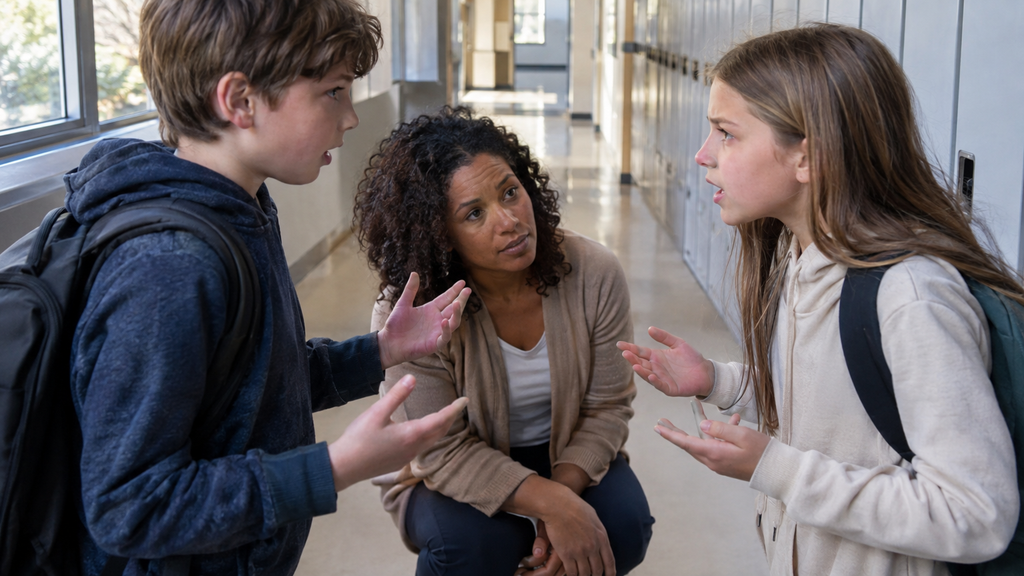
A painful interaction is more likely to meet the definition of bullying when it involves unwanted aggression, a power imbalance, and behavior that has happened repeatedly or is highly likely to happen again. The CDC definition of bullying includes all three elements, so a disagreement or hurtful moment doesn’t automatically count as bullying.
Peer conflict often involves young people with more comparable power who disagree, even if one or both feel upset. For example, two classmates may argue over a group project, and each may feel able to explain their view or ask an adult for help. A single cruel remark can also cause real hurt, even when there isn’t yet a pattern or clear power imbalance. It still deserves attention. A formal label isn’t a condition for offering care or addressing harm.
Patterns and power can be hard to judge from one account. A teen may describe repeated insults from a group, for instance, or say that one peer’s social influence makes it difficult to speak up. These details can help clarify whether the behavior is recurring, whether one young person has less ability to stop it, and what support may be needed. You don’t need to settle on a label before taking the concern seriously.
To understand the situation, ask what happened, whether it has happened before, and who was involved. Ask whether your teen feels able to respond or get help safely. If a teen says two friends argued once, you might ask whether both could speak freely and whether the disagreement continued afterward. If a teen describes repeated targeting, ask what has changed over time and whether the same people are involved. These questions gather context without putting the teen on trial.
Even when an incident doesn’t meet the formal definition of bullying, you can acknowledge its impact and consider what might help. A one-time insult may call for a conversation or support from a trusted adult. Repeated aggression or a power imbalance may call for a more coordinated response. Your teen’s safety and experience matter whether the situation is called bullying, conflict, or something else.
What Signs Suggest a Teen Needs Support?
Changes such as reluctance to attend school or activities, pulling away from friends, shifts in mood, or worry about messages and social media can be reasons for a caring check-in. No single behavior proves that bullying is happening. Teens may be quiet, upset, or reluctant to talk for many reasons, and those behaviors alone don’t establish what is going on.
Look for changes from your teen’s usual patterns. Is getting ready for school suddenly harder? Have favorite activities or friendships become less appealing? Does your teen seem especially uneasy after checking a phone or receiving a message? These clues can help you notice when school, friendships, or daily routines feel harder than usual, without jumping to a conclusion.
Try open, low-pressure questions: “How have things been going with people at school?” “Who have you been spending time with lately?” or “How are online conversations feeling?” Give your teen room to answer in their own way, including saying they don’t want to talk yet. A gentle follow-up, such as “Would it help to talk about what’s been making school feel difficult?” can invite more detail without assuming the cause or turning the conversation into an interrogation.
Pay attention to your teen’s account and ask what would help them feel supported. If they describe a threat, say they feel unsafe, or show significant distress or difficulty managing everyday activities, prioritize safety rather than waiting to determine whether the behavior fits a particular label. Depending on the concern, involve a trusted adult and consider support from a physician or qualified mental health professional. A quiet day or reluctance to share details isn’t proof of bullying, but a calm check-in can still let your teen know that support is available.
How Can Parents Listen Without Blame?

“I’m glad you told me. What would feel helpful right now?” is a calm invitation that lets a teen know they can talk without first defending or explaining themselves. Give them time to answer, and listen before trying to solve the problem. A teen may need to share only part of the story at first. Patience can make it easier to keep talking.
Immediate lectures, rapid-fire questions, or demands to confront another student can leave a teen feeling overwhelmed or less in control. Questions such as “What did you do to cause it?” shift responsibility onto the teen. Telling them to ignore the behavior or fight back can also dismiss their experience or push them toward an unsafe response. Instead, acknowledge the impact: “That sounds upsetting,” or “I can see why you’d feel uneasy.” Your teen shouldn’t have to prove that an experience was serious before you take their feelings seriously.
When they’re ready, ask, “What would you like to happen next?” Explore options together rather than deciding everything for them. Your teen might want you to listen, help them think through choices, or take a specific step. You can ask before offering ideas: “Would it help to talk through some possibilities?” Lisa Damour, PhD offers practical, research-backed guidance for adults navigating adolescence.
Respecting a teen’s agency doesn’t mean leaving them to manage a harmful situation alone. Be clear that you’ll take adult responsibility if safety is at stake, while involving your teen in how you proceed whenever possible. For example: “I want to understand what feels safest to you. If someone is threatening you, I may need to involve another adult, and I’ll tell you what I plan to do.” If immediate danger is present, act to protect your teen rather than waiting for them to choose a next step.
When Should Parents Involve the School?
Contact a teacher, counselor, administrator, or other appropriate school staff member when behavior is repeated, involves a power imbalance, affects a teen’s sense of safety, or continues after informal steps. You don’t need to settle on a label before asking the school for help.
Share clear, factual information and agree on how the school and family will stay in touch:
- Contact an appropriate staff member. Depending on the concern and the school’s process, that might be a teacher, counselor, administrator, or another designated staff member. If a teen feels unsafe, say so directly and ask what immediate support is available at school.
- Describe what happened. Share what the teen says occurred, when and where it happened, who was involved, and whether anyone witnessed it. Include whether the behavior has happened before and what your teen says would help them feel safer. Separate what you observed from what your teen or others reported.
- Ask how the school will respond. Ask about its reporting and follow-up process, who will be the family’s point of contact, and when you should check back. Keep a factual record of communications, including dates, the people you spoke with, and any next steps discussed.
- Follow up if the concern continues. If the first response doesn’t address the concern, use the school’s process to ask about next steps and who can review the situation. Avoid encouraging retaliation or arranging a direct confrontation between families. Ask the school to help coordinate a response.
School procedures and legal requirements differ by location. The U.S. has no federal law specifically addressing bullying, and states and territories address it in different ways. Families can review StopBullying.gov’s overview of laws and ask their school about local policy.
Massachusetts offers one example, not a rule that applies everywhere. State law requires covered schools to update bullying prevention and intervention plans at least every two years and train staff annually. It also requires staff to report known or witnessed bullying or retaliation, and a principal or designee to promptly investigate a report, as described in Massachusetts General Laws chapter 71, section 37O. Ask your school what procedures apply and what follow-up to expect.
How Should Teens Respond to Cyberbullying?
Teens should avoid retaliating or forwarding harmful content, save relevant evidence when it’s safe, use platform reporting tools, and involve trusted adults when online harassment is threatening, repeated, or affecting school life. A teen may be unsure what to save or whom to tell, especially when an online incident also affects friendships or feels hard to manage alone. You can offer to sit together and decide on a next step without taking over unless safety requires it.
- Don’t retaliate or forward the content. An angry reply can escalate the interaction, and forwarding a hurtful post or message can spread the harm. A teen can step away from the conversation rather than respond in the moment.
- Save relevant evidence before blocking or muting, if it’s safe and appropriate. Messages, screenshots, usernames, and dates may help a trusted adult or platform understand what happened. If the content is private or especially upsetting, the teen can ask an adult how to handle it rather than sharing it further.
- Report the content and review privacy settings. The teen can use the platform’s reporting tools and check who can contact them, view their posts, or tag them. A trusted adult can help with these steps when the content is threatening, the behavior keeps happening, or the teen is unsure how to proceed.
- Tell school staff when the online behavior affects school or involves classmates. Online harassment can spill into school, activities, and friendships. The teen or parent can share what happened with an appropriate staff member and ask what the school can address under its policy.
- Get prompt adult help for safety concerns. Direct threats, exposure of private information, or signs that a teen may be in immediate danger call for prompt help from a parent, caregiver, or another trusted adult. If danger seems immediate, adults should seek urgent local assistance.
Let your teen know they don’t have to decide alone what evidence to save or what details to share. Asking, “Would you like me to look at this with you?” can offer support while giving the teen room to participate in the next step.
How Can Teens Support One Another?
Teens can support one another by building respectful friendships, offering safe, low-pressure help to a student being targeted, and involving trusted adults rather than taking responsibility for stopping bullying themselves. You can encourage friendships where young people include one another, respect differences, and make room for different interests and identities. A teen shouldn’t have to hide what they enjoy or who they are to feel welcome among friends. When a teen witnesses bullying, small actions can communicate care without escalating the situation. They might check in privately with the targeted student after class, saying, “I noticed what happened. Are you okay?” They can refuse to join in, laugh along, or share hurtful posts, and they can tell a trusted adult what they saw. Even when a teen wants to help, they don’t need to confront the person causing harm, especially if doing so feels unsafe. Alerting an adult is a meaningful response, not a failure to act. You can talk through options before a situation arises. Ask which adults at school your teen would feel comfortable approaching, such as a teacher, counselor, coach, or administrator. If a teen is worried about being identified, they can ask the adult how the information will be handled. A witness can share what they observed without investigating, mediating between students, or promising to fix the situation. Peer support works best as part of a broader school response. The Community Preventive Services Task Force recommends school-based anti-bullying interventions that combine student skill-building with staff training and school-wide activities. Student work can include communication, problem-solving, empathy, emotional regulation, conflict management, and teamwork, according to the Task Force’s intervention guidance. These efforts give students and adults shared ways to respond, while keeping responsibility for addressing bullying with the adults and school systems equipped to intervene. A teen’s sense of belonging matters, and supportive peers and adults can help them feel less alone. Friendship can’t guarantee that bullying will stop, and no witness should be expected to solve it.
Choose One Supportive Next Step
When a teen describes a continuing problem, choose one next step together rather than trying to solve everything at once. Ask, “What would help most today: having me listen, writing down what happened, or contacting someone at school with you?” If the teen feels unsafe or reports a threat, act promptly and involve appropriate school staff, even if the teen would prefer to wait.
If the situation isn’t urgent, agree on a specific action and a time to check in. For example, the teen might choose a trusted teacher to approach tomorrow, while you help prepare a short, factual account of the concern. This keeps the teen involved without making them responsible for stopping the behavior.
School-based prevention works best as a coordinated effort, with student skill-building, staff training, and school-wide activities, as described in the Community Preventive Services Task Force guidance. Lisa Damour, PhD offers practical, research-backed guidance for parents and caregivers navigating adolescence and family life.
For help understanding why a teen may resist well-meant advice, explore Lisa Damour, PhD’s article “Why Teenagers Reject Parents’ Solutions to Their Problems.”